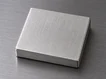
As-machined
The default finish straight off the machine, typically Ra 1.6–3.2 µm with light visible tool marks.
Process · CNC machining
Finishing solutions
A broad range of finishes to improve the performance and appearance of your parts. Each is selected by material, function and appearance requirement - so the treatment suits its application.
The default finish straight off the machine, typically Ra 1.6–3.2 µm with light visible tool marks.
Process · CNC machining
Type II and hard-coat anodizing create a protective oxide layer on aluminium for corrosion resistance, wear resistance and color.
Process · CNC / die casting
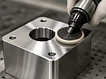
Mechanical polishing reduces roughness to a bright, smooth or mirror surface for cosmetic and high-spec parts.
Process · CNC / die casting
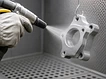
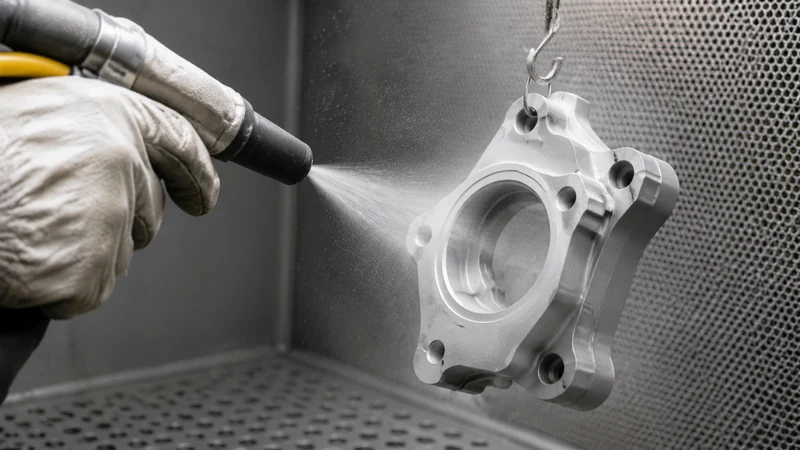
Blasting media give a uniform matte texture, removing tool marks and evening the surface before or after coating.
Process · CNC / die casting
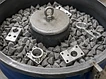
Vibratory tumbling deburrs and smooths small parts in bulk, rounding sharp edges and evening the surface.
Process · CNC / die casting
Specify your finish, color, gloss and any masking requirements on your drawing, or describe the function the surface must perform and we will recommend a suitable treatment at DFM review.
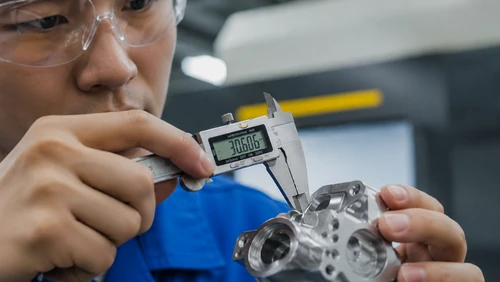
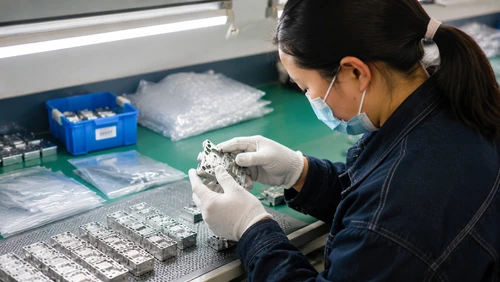
Request a finishing quoteEvery finished surface is inspected under controlled conditions against clear acceptance criteria - so coverage, texture, gloss and color stay consistent across the whole batch.
The basics
Surface finish describes a part’s outer surface after machining, whether left as-machined or treated to change its texture, hardness, corrosion resistance or appearance. Surface roughness (Ra) is one common measure, while the finish also affects how a part seals, wears, conducts, reflects light and resists its environment.
On precision parts, the finish is part of the specification, not an afterthought. The right treatment can improve functional performance and help meet dimensional and assembly requirements, while providing the appearance and protection the application needs.
Start from the surface's job — corrosion protection, wear resistance, conductivity, appearance or marking — plus the base material and any color or gloss target. Tell us the function, or specify the finish on your drawing, and we'll recommend a suitable treatment at DFM review.
Anodizing means electrochemically thickening aluminum's natural oxide layer to improve corrosion resistance, wear resistance and color. The aluminum part is submerged in an acid bath and an electric current is passed through it to grow this layer — Type II gives a standard finish, hard-coat (Type III) gives a thicker, harder layer for wear-critical parts.
Yes — black oxide (also called blackening coating) is a thin, low-cost conversion coating suited to ferrous metals like steel, giving a matte black finish with mild corrosion resistance. It adds minimal thickness, making it a good option for parts where anodizing isn't applicable, such as steel components.
Yes, we offer plating including gold plating for connectors and contacts, and electroless nickel plating for a uniform, corrosion-resistant coating even on complex internal geometries that electroplating can't reach evenly. Tell us the functional requirement — conductivity, wear, or corrosion resistance — and we'll confirm the right plating type.
No — anodizing only works on aluminum, while stainless steel and titanium form their own natural oxide layer and typically use passivation instead. Chem film treatments like alodine work on aluminum for corrosion protection with minimal thickness. Tell us your material and we'll confirm which finishes apply.
What we do is mechanical polishing using progressively finer abrasive compounds and controlled pressure to reduce surface roughness to a bright or mirror finish — different from a hand-applied metal polish or polishing compound meant for maintenance, which only cleans and shines an already-finished surface rather than removing material to change roughness.
Yes — laser marking is available for permanent part numbers, logos or serial identification, and powder coating is an option for parts needing a thicker, durable colored coating beyond what anodizing provides. Let us know if either fits your project.
Yes — for example, bead blasting or sand blasting to even the surface before anodizing, or vibratory deburring to round edges before a cosmetic polish. We sequence multi-step finishing so each process supports the next rather than undoing it.
Send your drawings along with the base material, required finish, color, quantity, and application requirements. Our team will review the surface finishing requirements, assess process suitability, and provide quotation feedback based on your project.
We use cookies to collect information about how you use this site. We use this information to make the website work as well as possible and improve our services.more details